The Optus Glean promise: predictability
Three pillars. Three commitments. No exceptions.
Predictable cost. One fixed monthly fee, set against a defined scope and an annual indexed review. No variable hours. No surprise invoices. No padded callout charges. Budgeted once, paid by Direct Debit, reviewed once a year.
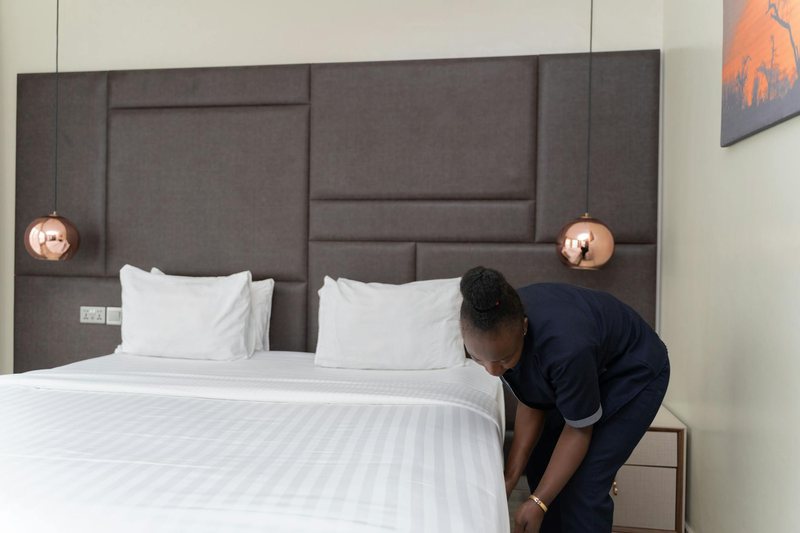
Predictable presence. The site is cleaned every day it is meant to be cleaned. A named primary cleaner is rostered to your contract, supported by a named relief who is already vetted, inducted, and trained on the same colour-coded system and IPC standard. The schedule does not depend on whether one person is available on one day.
Predictable freedom. A single point of accountability. One contract. One named manager. One number to call. Cleaning is no longer a problem the office has to manage — it is a service that runs.
Why cleaning in Ireland is structurally hard to get right
Most cleaning provision in Ireland — including in healthcare-adjacent settings — is delivered by a workforce that is structurally part-time and casual. A significant proportion of operatives across the sector also work as healthcare assistants in nursing homes, residential care, and acute hospitals. Cleaning shifts are typically taken when healthcare shifts are not available, and released when they are. This pattern is consistent with CSO labour data on accommodation, food, and administrative-support employment, and it is the underlying reason that buyers across Ireland encounter inconsistency from agencies they have contracted in good faith.
The pattern is reinforced by two background pressures specific to Ireland. Housing affordability limits the catchment for any role paying at or near the minimum wage. The Contract Cleaning Employment Regulation Order rate of €14.80 per hour for 2026, set under the Labour Court's sectoral employment framework, sits close enough to flexible care-sector pay that operatives drift toward whichever shift pays slightly more on the day. Both pressures pull cleaning staff away from contracted shifts and toward casual healthcare work.
The result, from the buyer's perspective, is the experience most practice managers, facilities leads, and procurement officers in Ireland describe: a clean that is half-completed when the contracted cleaner is available, missed entirely when they are not, and accompanied by recurring conversations with the agency about cover that may or may not arrive.
This is the structural problem Optus Glean is built to solve. Our operatives are fully PAYE-employed with guaranteed weekly hours, paid leave, and pension contributions under Irish auto-enrolment. They are paid above the ERO floor deliberately — because the structural reliability of the service depends on the cleaner choosing to remain in the role rather than rotating through casual healthcare shifts. A named primary cleaner is assigned to your site, supported by a named relief, both Garda-vetted and trained to Optus Glean's documented HIQA-aligned IPC standard.
Why Cinemas Need Professional Cleaning
Cinemas are high-footfall, food-intensive environments that generate enormous volumes of waste in concentrated bursts. A single busy screening can see 200+ audience members consuming popcorn, nachos, sweets, and drinks in a darkened room for two hours. When the lights come up, the auditorium needs to be cleaned and ready for the next audience in as little as 10–15 minutes. This demands a cleaning operation that is fast, systematic, and staffed by teams who can work under extreme time pressure.
Beyond between-screening turnaround, cinemas face persistent cleaning challenges that standard commercial cleaners are not equipped to handle: chewing gum embedded in carpets and under seats, sticky drink spills on stepped flooring, popcorn butter and nacho cheese residue on upholstery, and the unique hygiene demands of concession areas that must meet HACCP food safety standards.
Optus Glean provides dedicated cinema cleaning teams across Ireland. We understand the operational tempo of a multiplex — our teams are integrated into your screening schedule, stationed on-site during peak periods, and available for the end-of-day deep clean that resets the entire venue for the next day. We handle everything from the 10-minute turnaround to the quarterly seat extraction and annual gum removal programme.
Between-Screening Turnaround Cleaning
The between-screening turnaround is the most time-critical cleaning operation in any cinema. The audience leaves, and the next audience starts queuing within minutes. Our turnaround teams are deployed in pairs or groups of four, depending on the auditorium size, and they execute a rehearsed routine that covers every seat, row, and aisle.
- Row-by-row litter collection: cups, popcorn boxes, sweet wrappers, napkins
- Seat surface and armrest wipe-down with fast-drying sanitiser
- Cup holder emptying, wipe-down, and drink residue removal
- Floor sweeping of aisles, rows, and step treads
- Spill identification and spot treatment for drinks on carpet or steps
- Visual check for damage, lost property, and safety hazards
- Step lighting check to confirm all guide lights are functioning
A standard 200-seat auditorium is turned around in 10–15 minutes by a team of 3 operatives. We adjust team sizes to match your screening schedule — if you have back-to-back screenings across 8 screens, we deploy sufficient staff to cover every turnaround simultaneously.
End-of-Day Deep Cleaning
The end-of-day deep clean happens after the last screening and covers the entire cinema premises. This is the comprehensive clean that addresses everything the turnaround cleans cannot: embedded dirt, sticky residues, washroom deep cleaning, and concession area degreasing.
Our end-of-day programme covers every zone of the cinema.
- All auditoriums — Full seat cleaning (surfaces, backs, undersides), armrest and cup holder sanitisation, floor vacuuming (carpet) or mopping (hard floor), step edge cleaning, wall base wiping, and aisle cleaning.
- Foyer and entrance — Floor scrubbing or buffing, glass door and partition cleaning, ticket counter and self-service kiosk cleaning, display case and poster frame cleaning, entrance mat cleaning.
- Concession area — Full HACCP-compliant clean of all food equipment, counters, display cases, floor degreasing, storage areas, and waste removal.
- Washrooms — Full deep clean of all fixtures, floors, walls, mirrors, partitions, consumable replenishment, and hygiene unit servicing.
- VIP and premium areas — Bar cleaning, lounge seating, private washrooms, and premium auditorium cleaning.
- Back-of-house — Projection corridors, staff areas, management offices, and storage rooms.
Concession Area and Food Service Cleaning
Cinema concession areas serve food to thousands of customers daily and must comply with the same HACCP food safety requirements as any restaurant or food service business. The Environmental Health Officer can inspect your concession stand at any time and expects to see documented cleaning schedules, food-safe chemicals, and trained operatives.
Our concession cleaning covers popcorn machines (interior degreasing, exterior polishing), drinks dispensers and syrup lines, ice machines, hot food equipment (hot dogs, nachos, pizza warmers), confectionery displays and glass cases, counter surfaces and point-of-sale areas, floor degreasing behind and around service counters, stock rooms and cold storage, and waste management including recycling separation. We provide HACCP-compliant cleaning documentation and maintain records for EHO inspection.
Cinema Cleaning Pricing
Cinema cleaning pricing depends on the number of screens, total seating capacity, screening schedule density, and the scope of concession and VIP areas. Below are indicative 2026 pricing ranges for Ireland.
| Service | Price Range | Notes |
|---|---|---|
| Small cinema (2-3 screens) | €800 – €1,200/month | Turnarounds + end-of-day + washrooms |
| Mid-sized multiplex (5-8 screens) | €1,200 – €1,800/month | Full service including concession |
| Large multiplex (10+ screens) | €1,800 – €2,500+/month | Full service + VIP + IMAX |
| Chewing gum removal (per screen) | €200 – €450 | Monthly or quarterly, seats + floors |
| Quarterly seat deep clean (per screen) | €250 – €500 | Hot-water extraction or dry clean |
| Carpet deep clean (per screen) | €300 – €600 | Full auditorium carpet extraction |
Note: Prices exclusive of VAT. Contract pricing includes between-screening turnarounds, end-of-day deep cleans, washroom services, and concession area cleaning. Specialist services (gum removal, seat extraction) priced separately.
Chewing Gum Removal
Chewing gum is the bane of every cinema manager's life. It gets stuck to seats, carpets, armrests, and hard floor surfaces, and once it bonds with the material, it is extremely difficult to remove without specialist equipment. Optus Glean provides dedicated gum removal services using low-temperature freezing systems for fabric and carpet (the gum becomes brittle and lifts cleanly without damaging the material) and steam-based removal for hard floor surfaces. We also apply gum-resistant coatings to seats and carpets that create a barrier between the gum and the surface, making future removal significantly easier and reducing long-term damage to upholstery and flooring.
Serving Cinemas and Entertainment Venues Across Ireland
Optus Glean provides cinema and entertainment venue cleaning in every county in Ireland. We work with independent cinemas, multiplex chains, drive-in cinemas, theatres, concert venues, and bowling alleys. Whether you operate a 3-screen independent cinema in a market town or a 15-screen multiplex in Dublin, Cork, or Galway, we have the teams, the equipment, and the operational tempo to keep your venue clean, safe, and ready for every audience.
Frequently asked questions
How much does office cleaning cost in Ireland in 2026?
A corporate office is priced as a fixed monthly fee per site (or per floor, for multi-tenant buildings), tied to a defined scope and frequency. The Contract Cleaning ERO 2026 sets a €14.80/hour labour floor across the sector, but reputable providers quote the contract — multi-year term, annual indexed review, single monthly Direct Debit — not the hour. Pre-opening reset windows and out-of-hours deep cleans are inside the fee.
What standards apply to office cleaning in Ireland?
The Safety, Health and Welfare at Work Act 2005 obliges the employer to maintain a safe workplace, supported by the General Application Regulations 2007. The cleaning programme should produce a documented audit trail — chemical SDS, signed-off task records, training register — that supports the office manager's safety statement and ESG reporting on supply-chain labour standards.
Why is cleaning consistency such a problem in Irish office buildings?
Most Irish cleaning provision is delivered by part-time or casual operatives, frequently subcontracted from one agency to another without disclosure, often paid at or near the ERO floor with no continuity to the site. The result is a different cleaner most weeks, no real quality baseline across floors, and tenant complaints that surface six months into a 36-month contract.
What does ESG-aligned cleaning supply actually mean?
ESG-aligned cleaning means the labour in your supply chain is documented and lawful: PAYE-employed staff (not casual), paid above the Contract Cleaning ERO €14.80/hour floor, with paid leave and PRSI/pension contributions. It also means the chemical regime has SDS on file, waste streams are tracked under the Waste Management Acts, and the provider can answer a tenant or auditor question on day one. ESG is not a sticker — it is auditable supply-chain integrity.
What's the difference between PAYE and casual cleaning contracts in corporate?
A PAYE-employed cleaner is on payroll with the company that signs the contract, paid above the Contract Cleaning ERO floor, with paid leave and pension. A casual or self-employed operative is none of those things — and is often subcontracted in via a labour agency the buyer never signed with. PAYE staffing is the only model that supports a named primary cleaner per floor with continuity, and the only one that survives an ESG supply-chain audit.
How do I evaluate a cleaning provider for a multi-floor office?
Three checks. One: are the operatives PAYE-employed by the company that signs the contract, or subcontracted? Ask for a written commitment, not a tagline. Two: who is the named primary cleaner and named relief per floor or zone? Three: can the provider produce a transparent reporting pack — daily/weekly logs, audit scores, tenant feedback — that ties scope to evidence?
What should be in a cleaning contract for a corporate office?
Scope and frequencies per zone (workstations, meeting rooms, washrooms, kitchens, lift lobbies, reception), pre-opening reset window, named primary cleaner and named relief, the chemical regime with SDS, ESG and supply-chain confirmations, fixed monthly fee, annual indexed review, transparent KPIs and reporting, and a clean exit clause. No per-hour pricing. No undisclosed subcontracting.
How often should an office be professionally cleaned?
A typical corporate office runs a daily out-of-hours core clean (workstations, washrooms, kitchens, communal areas), a pre-opening morning reset where occupancy is heavy, weekly periodic tasks (high-level dusting, glass), and quarterly or six-monthly deep cleans (carpets, soft furnishings, fabric). In Ireland, multi-tenant buildings often add a midday washroom check and lift-lobby reset.
How Optus Glean handles staff shortages
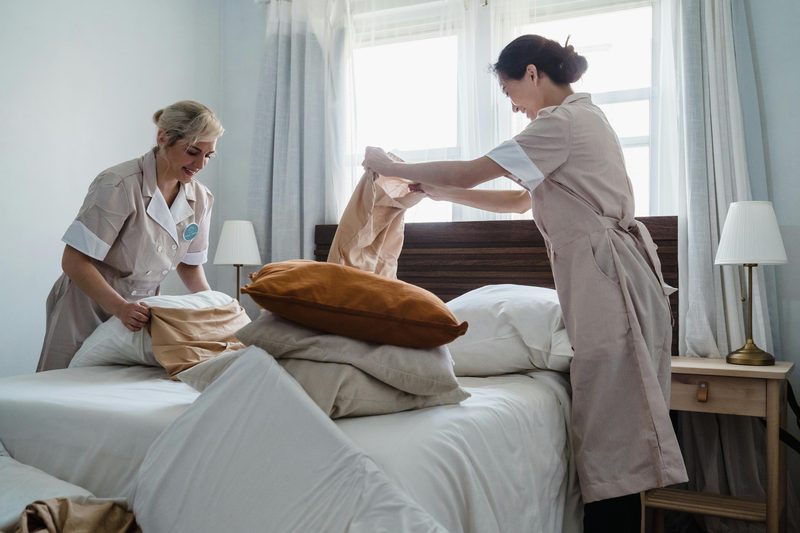
Every Optus Glean contract is staffed on a redundancy model rather than a single-person model. A named primary cleaner is assigned to the site at contract start. A named relief is assigned alongside them. Both are PAYE-employed by Optus Glean, both are Garda-vetted, both are inducted on the site's specific layout, access protocols, and colour-coded equipment system, and both are trained to the same documented HIQA-aligned IPC standard. Substitution is built into the contract from the first day, not arranged on the day cover is needed.
Sick day cover. When the primary cleaner is unable to work, the named relief is deployed. The office site contact is notified by 06:30 on the morning of the absence by SMS or email, with the name of the relief who is attending. The relief follows the same task list, uses the same equipment, and finishes within the same window. The standard of clean is unchanged because the relief was prepared for this scenario before the absence happened.
Annual leave cover. Annual leave is rostered weeks in advance and the relief is scheduled to cover the full leave period. The office is informed at the start of the leave period — not on the morning leave begins. This is the same model used in clinical rota management: known absences are pre-staffed, not improvised.
Long-term cover. If the primary cleaner is absent for more than two weeks (extended illness, parental leave, bereavement leave), cover is drawn from the wider trained bench rather than relying on the single named relief. The office is kept informed of the cover plan, the named individuals involved, and the expected duration. Continuity of standard is maintained because every operative on the bench is trained to the same documented standard.
Permanent reassignment. If the primary cleaner moves to a new permanent role within Optus Glean — promotion, relocation, retirement — the relief is promoted to primary on a planned timetable, a new relief is trained on the site, and both are introduced to the office before the handover takes effect. There is no day on which the office discovers, after the fact, that their cleaner has changed.
Substitution is Optus Glean's operational problem, not the office's risk to absorb. The buyer pays a fixed monthly fee for a defined scope to be delivered, every day it is meant to be delivered. The mechanism by which we deliver it — primary, relief, bench, retraining — is our cost to manage and our risk to carry.
Last reviewed: 2026-05-06