The Optus Glean promise: predictability
Three pillars. Three commitments. No exceptions.
Predictable cost. One fixed monthly fee, set against a defined scope and an annual indexed review. No variable hours. No surprise invoices. No padded callout charges. Budgeted once, paid by Direct Debit, reviewed once a year.
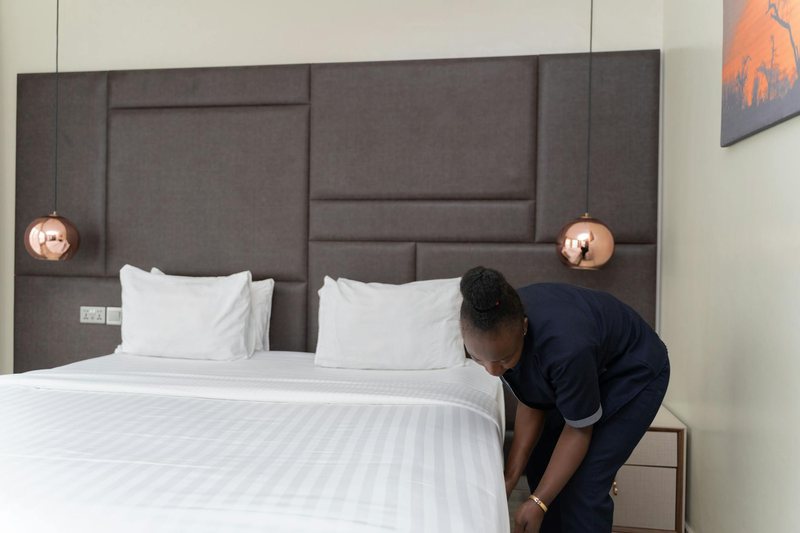
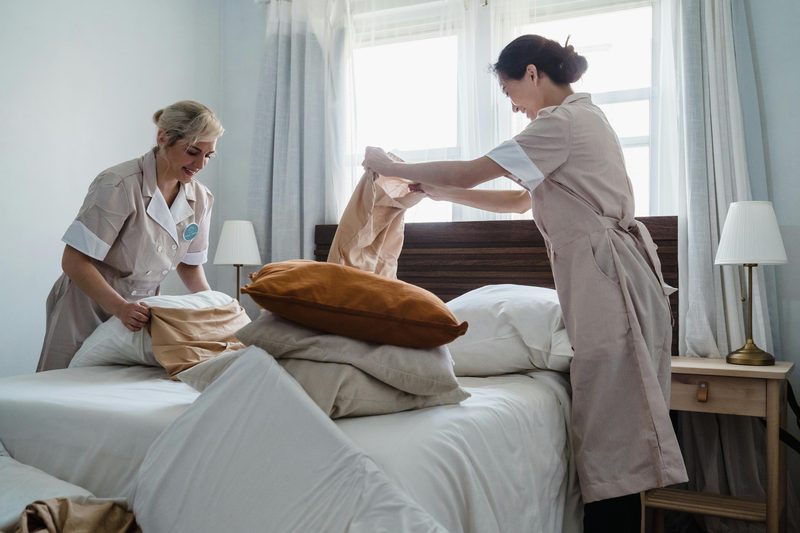
Predictable presence. The site is cleaned every day it is meant to be cleaned. A named primary cleaner is rostered to your contract, supported by a named relief who is already vetted, inducted, and trained on the same colour-coded system and IPC standard. The schedule does not depend on whether one person is available on one day.
Predictable freedom. A single point of accountability. One contract. One named manager. One number to call. Cleaning is no longer a problem the hotel has to manage — it is a service that runs.
Why cleaning in Ireland is structurally hard to get right
Most cleaning provision in Ireland — including in healthcare-adjacent settings — is delivered by a workforce that is structurally part-time and casual. A significant proportion of operatives across the sector also work as healthcare assistants in nursing homes, residential care, and acute hospitals. Cleaning shifts are typically taken when healthcare shifts are not available, and released when they are. This pattern is consistent with CSO labour data on accommodation, food, and administrative-support employment, and it is the underlying reason that buyers across Ireland encounter inconsistency from agencies they have contracted in good faith.
The pattern is reinforced by two background pressures specific to Ireland. Housing affordability limits the catchment for any role paying at or near the minimum wage. The Contract Cleaning Employment Regulation Order rate of €14.80 per hour for 2026, set under the Labour Court's sectoral employment framework, sits close enough to flexible care-sector pay that operatives drift toward whichever shift pays slightly more on the day. Both pressures pull cleaning staff away from contracted shifts and toward casual healthcare work.
The result, from the buyer's perspective, is the experience most practice managers, facilities leads, and procurement officers in Ireland describe: a clean that is half-completed when the contracted cleaner is available, missed entirely when they are not, and accompanied by recurring conversations with the agency about cover that may or may not arrive.
This is the structural problem Optus Glean is built to solve. Our operatives are fully PAYE-employed with guaranteed weekly hours, paid leave, and pension contributions under Irish auto-enrolment. They are paid above the ERO floor deliberately — because the structural reliability of the service depends on the cleaner choosing to remain in the role rather than rotating through casual healthcare shifts. A named primary cleaner is assigned to your site, supported by a named relief, both Garda-vetted and trained to Optus Glean's documented HIQA-aligned IPC standard.
Why Restaurants Need Professional Cleaning
Running a restaurant in Ireland means navigating a regulatory environment that has become increasingly strict since the introduction of the Food Safety Authority of Ireland (FSAI) inspection regime. Environmental Health Officers conduct unannounced inspections. They check cleaning schedules, chemical storage, temperature logs, and the physical cleanliness of every surface in your kitchen and dining area. A poor inspection result does not just risk a closure order — it damages your reputation on social media within hours.
Most restaurant owners rely on their kitchen team to handle cleaning at the end of each shift. The problem is that shift-end cleaning, however thorough, only covers accessible surfaces. It does not reach inside extraction ductwork, behind fixed equipment, underneath heavy ranges, inside ceiling voids, or deep within grease traps. Over time, grease, food debris, and bacteria accumulate in these hidden areas, creating fire risks, pest harbourage, and hygiene failures that become visible only during an inspection — or worse, during a customer complaint.
Optus Glean provides two distinct services for restaurants: scheduled contract cleaning (nightly or post-service front-of-house and kitchen cleaning) and periodic deep cleaning (quarterly or monthly kitchen deep cleans, extraction cleaning, and equipment degreasing). Most of our restaurant clients use both services together, though each is available separately.
HACCP-Compliant Kitchen Cleaning
Every food business in Ireland is legally required to operate a HACCP system under EC Regulation 852/2004. Cleaning is a foundational element of any HACCP plan. If your cleaning is not documented, scheduled, and verifiable, your HACCP plan has a gap that the EHO will identify.
Optus Glean builds a HACCP-compliant cleaning schedule for every restaurant client. This schedule covers:
- Every surface, piece of equipment, and area in the kitchen and front-of-house
- Cleaning frequency: daily, weekly, monthly, and quarterly tasks
- Specific cleaning method and chemical for each task
- Colour-coded equipment assignments to prevent cross-contamination
- Temperature verification for dishwashers (minimum 82°C final rinse)
- Sign-off sheets for staff accountability
- Deep clean records with dated photographic evidence
This documentation becomes part of your HACCP file and is available for EHO inspection at any time. We update it whenever your menu, equipment, or layout changes.
Kitchen Deep Cleaning
A kitchen deep clean goes beyond daily cleaning to address every surface, fixture, and piece of equipment in the commercial kitchen. Our deep clean process is systematic and thorough.
- Equipment shutdown and cool-down — All cooking equipment is switched off and allowed to cool. Gas and electrical supplies are isolated where required.
- Heavy degreasing — Ovens, ranges, fryers, griddles, salamanders, and chargrills are treated with food-safe alkaline degreaser. Baked-on carbon is removed from burners, grates, and interior surfaces.
- Extraction canopy and filters — Canopy surfaces are degreased. Baffle filters are removed, soaked, and scrubbed. Filter housings are cleaned.
- Walls, floors, and ceilings — Tiled walls are degreased from ceiling to floor. Floor drains are cleared and sanitised. Ceiling tiles and light fittings are cleaned and degreased.
- Cold storage — Walk-in fridges and freezers are cleaned internally and externally. Shelving is removed and sanitised. Door seals are cleaned and checked.
- Ancillary areas — Pot wash area, dry stores, waste storage, and staff changing areas are all included.
- Sanitisation — All food contact surfaces receive a final sanitisation pass with food-safe biocide.
- Documentation — Photographic before-and-after evidence is provided. A deep clean certificate is issued for your HACCP records.
Extraction Duct Cleaning
Grease-laden extraction ductwork is one of the most common causes of commercial kitchen fires in Ireland. Insurance companies increasingly require documented evidence of regular extraction cleaning as a condition of cover. If your extraction system has not been professionally cleaned in the last 12 months, you may find your fire insurance is void.
Optus Glean cleans the complete extraction system from canopy to discharge point. This includes canopy interior surfaces, baffle or mesh filters, ductwork internals (using rotary brush and scraper systems), fan units and impellers, and the external discharge stack. We issue a Certificate of Extraction Cleaning after each service, confirming the date, scope of work, and condition of the system. This certificate satisfies both insurance and EHO requirements.
Extraction cleaning frequency depends on usage: high-volume kitchens (200+ covers/day) should be cleaned every 6 months, standard restaurants every 12 months. We schedule this work overnight or during your regular closing day to avoid any disruption to service.
Front-of-House Cleaning
The dining area is where your customers form their impression of your restaurant. A sticky floor, a dusty light fitting, or a stained seat cover can undo thousands of euros of investment in food and service. Our front-of-house cleaning covers every surface your customers see and touch.
- Floor cleaning: vacuuming, mopping, or scrubbing depending on floor type (tiles, wood, carpet, polished concrete)
- Table and chair sanitation: all surfaces wiped and sanitised
- Booth and banquette upholstery: vacuuming, spot cleaning, periodic deep extraction
- Bar area: counter tops, glass shelving, back-bar surfaces, ice well surrounds
- Entrance and reception: door glass, mats, host station, menus and holders
- Light fittings and decorative features: dusting, polishing, cobweb removal
- Window sills, ledges, and artwork: dust-free surfaces throughout
Restaurant Cleaning Pricing
Restaurant cleaning pricing depends on the size of the premises, the scope of the kitchen, and the cleaning frequency. Below are indicative 2026 pricing ranges for Ireland. Every Optus Glean contract is priced individually following a site survey.
| Service | Price Range | Notes |
|---|---|---|
| Nightly contract cleaning (small cafe) | €350 – €550/month | 30-50 covers, 5 nights/week |
| Nightly contract cleaning (mid restaurant) | €550 – €850/month | 50-100 covers, 6 nights/week |
| Nightly contract cleaning (large restaurant) | €850 – €1,200/month | 100+ covers, full kitchen |
| Kitchen deep clean | €500 – €1,500 | Quarterly or monthly, size-dependent |
| Extraction duct cleaning | €400 – €1,200 | Full system, canopy to discharge |
| Grease trap cleaning | €150 – €350 | Every 4-8 weeks, size-dependent |
Note: Prices exclusive of VAT. Bundling kitchen deep cleans with table linen laundry saves 10–15% on the combined contract. All pricing includes cleaning chemicals, equipment, and waste removal.
The Integrated Advantage for Restaurants
Optus Glean is one of the few cleaning companies in Ireland that combines contract cleaning, deep cleaning, extraction cleaning, commercial laundry (table linen, chef whites, aprons), and washroom services under a single contract. For restaurant owners, this means one provider, one invoice, one point of contact, and genuine cost savings of 15–25% compared to sourcing each service separately.
Our cleaning teams are trained specifically for food-service environments. They hold food safety awareness certification, understand HACCP principles, and know how to work around kitchen equipment without causing damage. They carry their own colour-coded equipment and food-safe chemicals — nothing from your kitchen is used for cleaning purposes.
Serving Restaurants Across Ireland
Optus Glean provides restaurant cleaning services in every county in Ireland. Whether you are a Michelin-starred restaurant in Dublin, a busy gastropub in Cork, a hotel restaurant in Galway, a fish-and-chip shop in Limerick, or a cafe in Killarney, we have the people, the equipment, and the systems to keep your premises HACCP-compliant and inspection-ready at all times.
We work with independent restaurants, restaurant groups, hotel restaurants, fast-casual chains, cafes, and catering kitchens. Our scheduling system accommodates late-night and early-morning cleaning windows to fit around your service hours.
Frequently asked questions
How much does hotel and hospitality cleaning cost in Ireland in 2026?
A hotel, restaurant, or function venue is priced as a fixed monthly fee tied to scope: public-area programme, back-of-house compliance cleaning, washrooms, function spaces, and out-of-hours deep cleans. The Contract Cleaning ERO 2026 sets a €14.80/hour labour floor across the sector, but reputable providers quote the contract — multi-year term, annual indexed review, single monthly Direct Debit — not the hour.
What standards apply to hospitality cleaning in Ireland?
The FSAI Hygiene of Foodstuffs Regulations and HACCP principles set the back-of-house standard; HSE Environmental Health Officers inspect against them. Failte Ireland's classification standards drive the guest-facing benchmark in hotels and serviced apartments. The cleaning programme must produce a documented audit trail — SDS, signed task logs, contact-time records — that supports the GM's FSAI compliance file.
What's the FSAI requirement for back-of-house cleaning?
FSAI inspections check that food-contact and food-adjacent surfaces are cleaned and disinfected to documented frequencies, that chemical use is controlled and justified per the SDS, that colour-coded equipment prevents cross-contamination, and that records evidence the programme. The cleaning provider's job is to deliver and document — the GM and head chef remain the duty-holders, but a credible provider makes audit-ready evidence routine.
What's the difference between guest-facing and back-of-house cleaning standards?
Guest-facing cleaning is judged on visible standard — finish, presentation, scent, consistency across rooms — driven by Failte Ireland classification and TripAdvisor reality. Back-of-house cleaning is judged on FSAI and HACCP compliance — food-safe surfaces, validated chemicals, documented frequencies. A reputable provider runs both under one contract with one named site lead, not as separate jobs subcontracted to different crews.
What's the difference between PAYE and casual cleaning contracts in hospitality?
A PAYE-employed cleaner is on payroll with the company that signs the contract, paid above the Contract Cleaning ERO €14.80/hour floor, Garda-vetted where required, with paid leave and PRSI/pension. A casual or self-employed operative is none of those things and rotates between venues. PAYE staffing is the only model that supports a named primary cleaner who actually knows your kitchen extract schedule and your function-room setup pattern.
How do I evaluate a cleaning provider for a hotel?
Three checks. One: are the cleaners PAYE-employed by the company that signs the contract, or subcontracted? Two: who is the named site lead and how is back-of-house separated from guest-facing crew? Three: can the provider produce method statements and SDS that satisfy an FSAI inspection on day one of the contract — not "we'll get there in a few months".
What should be in a cleaning contract for a hotel or restaurant?
Scope per zone (front of house, guest rooms, function spaces, kitchens, waste rooms, washrooms), back-of-house frequencies tied to FSAI and HACCP, named site lead and crew, the chemical regime with SDS and contact times, colour-coded equipment commitment, fixed monthly fee, annual indexed review, audit-ready reporting, and a clean exit clause. No per-hour pricing.
How often should function spaces and event venues be cleaned?
Function spaces are cleaned to event turnaround — pre-event reset, mid-event support where contracted, post-event deep clean — over and above the daily public-area programme. The cleaning provider should hold a known-volume retainer with named relief crews available for weekend and out-of-hours peaks. In Ireland, larger function venues typically pre-book extra crews for the November-to-January season.
How Optus Glean handles staff shortages
Every Optus Glean contract is staffed on a redundancy model rather than a single-person model. A named primary cleaner is assigned to the site at contract start. A named relief is assigned alongside them. Both are PAYE-employed by Optus Glean, both are Garda-vetted, both are inducted on the site's specific layout, access protocols, and colour-coded equipment system, and both are trained to the same documented HIQA-aligned IPC standard. Substitution is built into the contract from the first day, not arranged on the day cover is needed.
Sick day cover. When the primary cleaner is unable to work, the named relief is deployed. The hotel site contact is notified by 06:30 on the morning of the absence by SMS or email, with the name of the relief who is attending. The relief follows the same task list, uses the same equipment, and finishes within the same window. The standard of clean is unchanged because the relief was prepared for this scenario before the absence happened.
Annual leave cover. Annual leave is rostered weeks in advance and the relief is scheduled to cover the full leave period. The hotel is informed at the start of the leave period — not on the morning leave begins. This is the same model used in clinical rota management: known absences are pre-staffed, not improvised.
Long-term cover. If the primary cleaner is absent for more than two weeks (extended illness, parental leave, bereavement leave), cover is drawn from the wider trained bench rather than relying on the single named relief. The hotel is kept informed of the cover plan, the named individuals involved, and the expected duration. Continuity of standard is maintained because every operative on the bench is trained to the same documented standard.
Permanent reassignment. If the primary cleaner moves to a new permanent role within Optus Glean — promotion, relocation, retirement — the relief is promoted to primary on a planned timetable, a new relief is trained on the site, and both are introduced to the hotel before the handover takes effect. There is no day on which the hotel discovers, after the fact, that their cleaner has changed.
Substitution is Optus Glean's operational problem, not the hotel's risk to absorb. The buyer pays a fixed monthly fee for a defined scope to be delivered, every day it is meant to be delivered. The mechanism by which we deliver it — primary, relief, bench, retraining — is our cost to manage and our risk to carry.
Last reviewed: 2026-05-06