The Optus Glean promise: predictability
Three pillars. Three commitments. No exceptions.
Predictable cost. One fixed monthly fee, set against a defined scope and an annual indexed review. No variable hours. No surprise invoices. No padded callout charges. Budgeted once, paid by Direct Debit, reviewed once a year.
Predictable presence. The site is cleaned every day it is meant to be cleaned. A named primary cleaner is rostered to your contract, supported by a named relief who is already vetted, inducted, and trained on the same colour-coded system and IPC standard. The schedule does not depend on whether one person is available on one day.
Predictable freedom. A single point of accountability. One contract. One named manager. One number to call. Cleaning is no longer a problem the site has to manage — it is a service that runs.
Why cleaning in Ireland is structurally hard to get right
Most cleaning provision in Ireland — including in healthcare-adjacent settings — is delivered by a workforce that is structurally part-time and casual. A significant proportion of operatives across the sector also work as healthcare assistants in nursing homes, residential care, and acute hospitals. Cleaning shifts are typically taken when healthcare shifts are not available, and released when they are. This pattern is consistent with CSO labour data on accommodation, food, and administrative-support employment, and it is the underlying reason that buyers across Ireland encounter inconsistency from agencies they have contracted in good faith.
The pattern is reinforced by two background pressures specific to Ireland. Housing affordability limits the catchment for any role paying at or near the minimum wage. The Contract Cleaning Employment Regulation Order rate of €14.80 per hour for 2026, set under the Labour Court's sectoral employment framework, sits close enough to flexible care-sector pay that operatives drift toward whichever shift pays slightly more on the day. Both pressures pull cleaning staff away from contracted shifts and toward casual healthcare work.
The result, from the buyer's perspective, is the experience most practice managers, facilities leads, and procurement officers in Ireland describe: a clean that is half-completed when the contracted cleaner is available, missed entirely when they are not, and accompanied by recurring conversations with the agency about cover that may or may not arrive.
This is the structural problem Optus Glean is built to solve. Our operatives are fully PAYE-employed with guaranteed weekly hours, paid leave, and pension contributions under Irish auto-enrolment. They are paid above the ERO floor deliberately — because the structural reliability of the service depends on the cleaner choosing to remain in the role rather than rotating through casual healthcare shifts. A named primary cleaner is assigned to your site, supported by a named relief, both Garda-vetted and trained to Optus Glean's documented HIQA-aligned IPC standard.
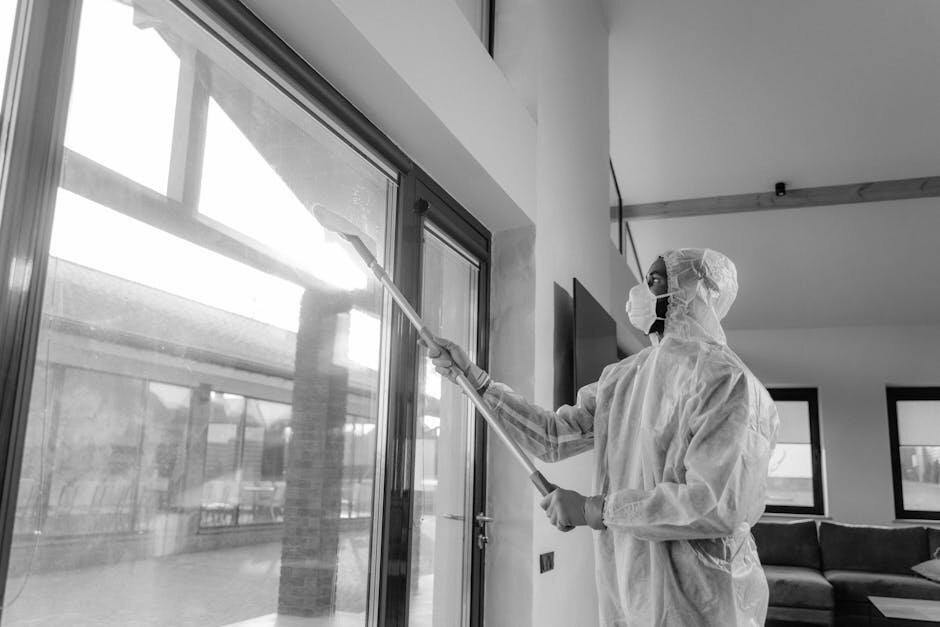
Professional Commercial Window Cleaning in Ireland
Clean windows are one of the most immediate visual signals of a well-maintained building. Whether it is a shopfront on Grafton Street, a corporate office block in Sandyford, a hotel overlooking Galway Bay, or a hospital in Cork, the appearance of your windows communicates professionalism, attention to detail, and pride in your premises. Dirty, streaked, or neglected windows communicate the opposite.
Optus Glean provides commercial window cleaning services to businesses and organisations of every size across all 26 counties of Ireland. We clean windows at any height using the safest and most appropriate access method for each building: water-fed pole for buildings up to 6 storeys, rope access for high-rise buildings, MEWP (Mobile Elevating Work Platforms) and cherry pickers for difficult access points, and traditional methods for internal windows and ground-floor retail.
Every window cleaning operative is Garda vetted, trained in work-at-height safety, and covered by our €6.5 million public liability and €13 million employer's liability insurance. All work is carried out under documented method statements and site-specific risk assessments compliant with the Safety, Health and Welfare at Work Act 2005.
Access Methods: The Right Tool for Every Building
The access method determines the cost, speed, safety profile, and quality of the window clean. Optus Glean assesses every building during a site survey and recommends the safest, most cost-effective method.
Water-Fed Pole Systems
Water-fed pole cleaning is the most common method for commercial buildings up to 5 or 6 storeys (approximately 20 metres). Telescopic carbon fibre poles deliver purified water to a rotating brush head that scrubs the glass and frames. The water is purified through a multi-stage deionisation and reverse osmosis system that removes all dissolved minerals, so it dries completely clear with no spots or streaks.
Water-fed pole systems offer significant advantages over traditional ladder and squeegee methods:
- No ladders required, eliminating the most common cause of window cleaning injuries
- Operatives work from ground level, complying with work-at-height regulations
- Frames, sills, and rubber seals are cleaned simultaneously with the glass
- Pure water attracts less dirt after cleaning, so windows stay cleaner for longer
- Faster than traditional methods for multi-storey buildings
- No chemicals used — pure water only
Our water-fed pole systems produce up to 500 litres of purified water per day, enough to clean the windows of a large commercial building in a single visit.
Rope Access
For buildings above 6 storeys or where building geometry prevents pole access, rope access is the preferred method. Rope access technicians descend the building face on industrial ropes, using traditional squeegee and applicator techniques to clean each window by hand.
All Optus Glean rope access operatives hold IRATA (Industrial Rope Access Trade Association) or equivalent certifications. Teams always work in pairs: one technician cleans while the other manages safety lines from the roof anchor point. Rope access is:
- More cost-effective than scaffolding or building management units (BMUs)
- Faster to set up and demobilise than MEWP or scaffolding
- Suitable for buildings of any height, including high-rise commercial and residential towers
- Effective on complex building facades with recesses, overhangs, and curved surfaces
MEWP and Cherry Picker
Mobile Elevating Work Platforms (MEWPs) include cherry pickers, scissor lifts, and boom lifts. These are used where rope access is not practical — for example, on buildings without suitable roof anchor points, or where the ground surface allows vehicle access right up to the building face.
MEWP operation requires IPAF (International Powered Access Federation) trained operators. Optus Glean arranges MEWP hire and operation as part of the window cleaning contract, so you receive a single invoice for the complete service. Cherry pickers can reach up to 40 metres or more depending on the machine specification.
Traditional Methods
For internal window cleaning and ground-floor retail frontages, traditional squeegee and applicator techniques remain the most appropriate method. Internal window cleaning is typically included in office cleaning contracts or can be booked as a standalone service. Shopfront window cleaning using traditional methods is fast, inexpensive, and provides an impeccable hand finish.
Window Cleaning Pricing in Ireland
Window cleaning costs depend on the number of windows, the access method required, the building height, and the frequency of cleaning. Below are indicative 2026 pricing ranges for commercial window cleaning in Ireland.
| Access Method | Price Per Pane | Typical Application |
|---|---|---|
| Traditional (ground floor) | €2 – €4 | Shopfronts, retail units, ground-floor offices |
| Water-fed pole (up to 6 storeys) | €3 – €5 | Office blocks, hotels, apartments, schools |
| Rope access (6+ storeys) | €6 – €8 | High-rise offices, residential towers |
| MEWP / cherry picker | €5 – €10 | Difficult access, no roof anchors, complex facades |
| Internal window cleaning | €2 – €4 | Internal partitions, internal glass, atriums |
| Building Type | Monthly Contract | Frequency |
|---|---|---|
| Small retail unit (6–10 windows) | €40 – €80 | Fortnightly or monthly |
| Small office (20–40 windows) | €80 – €200 | Monthly |
| Medium office block (50–150 windows) | €200 – €500 | Monthly or bi-monthly |
| Large commercial building (150+ windows) | €500 – €1,500+ | Monthly |
| Apartment block (communal windows) | €150 – €400 | Bi-monthly or quarterly |
All prices are exclusive of VAT. Contract clients receive discounted rates compared to one-off bookings. Combined packages with pressure washing and gutter cleaning offer additional value.
Combined Service: Windows, Gutters, and Fascia
Most commercial buildings need more than just window cleaning. Gutters fill with leaves, moss, and debris. Fascia boards and soffits accumulate dirt and algae. Cladding panels lose their appearance over time. Optus Glean offers a combined exterior cleaning service that covers all of these elements in a single visit.
Gutter Cleaning
Blocked gutters cause water overflow, damp penetration, and structural damage to buildings. Our gutter cleaning service uses a combination of gutter vacuum systems (operating from ground level) and manual clearance from height where necessary. We remove all debris, flush downpipes to ensure they are clear, and report any damage or repairs needed. Gutter cleaning is typically priced from €3 to €6 per linear metre.
Fascia, Soffit, and Cladding Cleaning
UPVC fascia boards, soffits, and cladding panels are cleaned using soft-wash techniques with the water-fed pole system. This removes algae, moss, traffic film, and atmospheric staining without damaging the surface. For painted or coated surfaces, we use appropriate cleaning solutions that remove dirt without affecting the finish. Fascia cleaning is typically combined with window cleaning visits for maximum efficiency.
Safety Credentials and Compliance
Window cleaning at height is one of the most regulated activities in the cleaning industry. Optus Glean takes safety seriously at every level:
- Safety, Health and Welfare at Work Act 2005 — Full compliance with all provisions relating to work at height, risk assessment, and safe systems of work
- General Application Regulations 2007, Part 4 — Specific compliance with work-at-height regulations including the hierarchy of controls
- HSA Guidance — All operations follow Health and Safety Authority guidance on window cleaning, ladder safety, and work at height
- IRATA certification — All rope access operatives hold current IRATA or equivalent certifications
- IPAF training — All MEWP operators hold current IPAF operator licences
- Site-specific risk assessments — Every building receives a bespoke risk assessment before work begins, reviewed annually or when conditions change
- Method statements — Documented method statements for every access type and building configuration
- Insurance — €6.5M public liability and €13M employer's liability, specifically covering work at height
Scheduling and Frequency
Optus Glean offers flexible window cleaning schedules to match your building's needs and budget:
- Weekly — Premium retail premises, customer-facing ground-floor windows
- Fortnightly — Retail units, showrooms, restaurants, hotels
- Monthly — Corporate offices, apartment blocks, healthcare facilities, schools
- Bi-monthly — Standard commercial buildings, industrial offices
- Quarterly — Warehouse and industrial buildings, low-priority areas
All schedules include a weather contingency policy. If conditions are unsafe (high winds, heavy rain, lightning), we reschedule within 48 hours at no extra charge. Ireland's climate means we plan for weather disruption as standard, not as an exception.
Sectors We Serve
Our commercial window cleaning services are used by clients across every sector:
- Corporate offices — Office cleaning clients frequently add window cleaning to their contract
- Retail and high street — Retail premises benefit from weekly or fortnightly shopfront cleaning
- Hotels and hospitality — Hotels require pristine windows for guest experience and reviews
- Healthcare — Hospitals and clinics need clean windows for patient wellbeing and HIQA compliance
- Apartment blocks — Management companies include communal window cleaning in service charge budgets
- Education — Schools, universities, and campus buildings
- Industrial — Factory and warehouse high-level glazing and roof lights
Frequently Asked Questions About Commercial Window Cleaning
How much does commercial window cleaning cost in Ireland?
Commercial window cleaning in Ireland costs between €2 and €8 per window pane depending on the height, access method, and window size. Ground-floor shopfronts start from €2 to €4 per pane. Water-fed pole cleaning costs €3 to €5 per pane. High-rise rope access or MEWP work starts from €6 to €8 per pane. Monthly contracts for commercial buildings range from €150 to €600+ per visit depending on building size. Optus Glean provides free site surveys and fixed-price quotations.
How often should commercial windows be cleaned?
Most commercial buildings benefit from monthly window cleaning. Retail premises and customer-facing buildings should be cleaned fortnightly or monthly. Office buildings typically schedule monthly or bi-monthly cleans. Industrial premises may only need quarterly cleaning. The ideal frequency depends on location, proximity to roads, pollution levels, and your standards. Optus Glean offers flexible scheduling from weekly to quarterly programmes.
What is water-fed pole window cleaning?
Water-fed pole cleaning uses telescopic carbon fibre poles reaching up to 20 metres (5–6 storeys). Purified water is pumped through the pole to a brush head that scrubs the glass and frame. The water is purified through deionisation and reverse osmosis, so it dries without spots or streaks. It is safer than ladder work, faster for multi-storey buildings, and produces a superior finish because frames and sills are cleaned simultaneously.
What is rope access window cleaning?
Rope access involves IRATA-certified technicians descending the building face on industrial ropes to clean windows by hand. It is used on buildings above 6 storeys or where building geometry prevents pole access. Teams always work in pairs for safety. Rope access is often more cost-effective than scaffolding or cherry pickers and can be set up and demobilised quickly with minimal disruption to the building's occupants.
How high can water-fed poles reach?
Commercial water-fed poles can reach up to 20 metres, approximately 5 to 6 storeys. Specialist poles extend to 25 metres in some cases. Effective reach depends on the pole material, wind conditions, and building access. For buildings above 6 storeys, rope access or MEWP methods are required. Optus Glean assesses the appropriate method for each building during a site survey.
Is window cleaning at height regulated in Ireland?
Yes. Window cleaning at height is regulated under the Safety, Health and Welfare at Work Act 2005 and the General Application Regulations 2007, Part 4 (Work at Height). The regulations require risk assessment, use of the safest practicable access method, and fall prevention measures. The Health and Safety Authority (HSA) enforces these regulations. Optus Glean maintains full compliance documentation including method statements and site-specific risk assessments.
What safety regulations apply to window cleaning in Ireland?
Key regulations include the Safety, Health and Welfare at Work Act 2005, the General Application Regulations 2007 (Part 4), and HSA guidance on window cleaning and work at height. Requirements include conducting risk assessments, using the safest practicable access method, ensuring operative training and competence, maintaining fall protection equipment, and documenting all safety procedures. IRATA certification is required for rope access, and IPAF training for MEWP operation.
How Optus Glean handles staff shortages
Every Optus Glean contract is staffed on a redundancy model rather than a single-person model. A named primary cleaner is assigned to the site at contract start. A named relief is assigned alongside them. Both are PAYE-employed by Optus Glean, both are Garda-vetted, both are inducted on the site's specific layout, access protocols, and colour-coded equipment system, and both are trained to the same documented HIQA-aligned IPC standard. Substitution is built into the contract from the first day, not arranged on the day cover is needed.
Sick day cover. When the primary cleaner is unable to work, the named relief is deployed. The site site contact is notified by 06:30 on the morning of the absence by SMS or email, with the name of the relief who is attending. The relief follows the same task list, uses the same equipment, and finishes within the same window. The standard of clean is unchanged because the relief was prepared for this scenario before the absence happened.
Annual leave cover. Annual leave is rostered weeks in advance and the relief is scheduled to cover the full leave period. The site is informed at the start of the leave period — not on the morning leave begins. This is the same model used in clinical rota management: known absences are pre-staffed, not improvised.
Long-term cover. If the primary cleaner is absent for more than two weeks (extended illness, parental leave, bereavement leave), cover is drawn from the wider trained bench rather than relying on the single named relief. The site is kept informed of the cover plan, the named individuals involved, and the expected duration. Continuity of standard is maintained because every operative on the bench is trained to the same documented standard.
Permanent reassignment. If the primary cleaner moves to a new permanent role within Optus Glean — promotion, relocation, retirement — the relief is promoted to primary on a planned timetable, a new relief is trained on the site, and both are introduced to the site before the handover takes effect. There is no day on which the site discovers, after the fact, that their cleaner has changed.
Substitution is Optus Glean's operational problem, not the site's risk to absorb. The buyer pays a fixed monthly fee for a defined scope to be delivered, every day it is meant to be delivered. The mechanism by which we deliver it — primary, relief, bench, retraining — is our cost to manage and our risk to carry.
Last reviewed: 2026-05-06