The Optus Glean promise: predictability
Three pillars. Three commitments. No exceptions.
Predictable cost. One fixed monthly fee, set against a defined scope and an annual indexed review. No variable hours. No surprise invoices. No padded callout charges. Budgeted once, paid by Direct Debit, reviewed once a year.
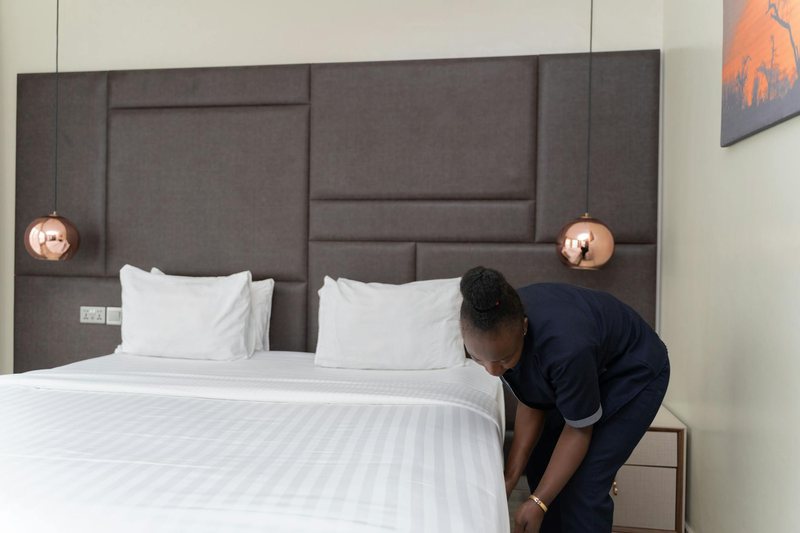
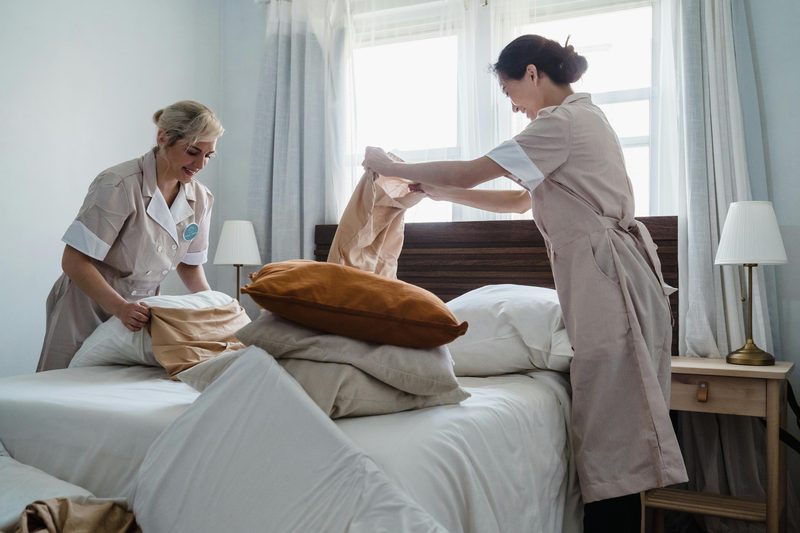
Predictable presence. The site is cleaned every day it is meant to be cleaned. A named primary cleaner is rostered to your contract, supported by a named relief who is already vetted, inducted, and trained on the same colour-coded system and IPC standard. The schedule does not depend on whether one person is available on one day.
Predictable freedom. A single point of accountability. One contract. One named manager. One number to call. Cleaning is no longer a problem the office has to manage — it is a service that runs.
Why cleaning in Ireland is structurally hard to get right
Most cleaning provision in Ireland — including in healthcare-adjacent settings — is delivered by a workforce that is structurally part-time and casual. A significant proportion of operatives across the sector also work as healthcare assistants in nursing homes, residential care, and acute hospitals. Cleaning shifts are typically taken when healthcare shifts are not available, and released when they are. This pattern is consistent with CSO labour data on accommodation, food, and administrative-support employment, and it is the underlying reason that buyers across Ireland encounter inconsistency from agencies they have contracted in good faith.
The pattern is reinforced by two background pressures specific to Ireland. Housing affordability limits the catchment for any role paying at or near the minimum wage. The Contract Cleaning Employment Regulation Order rate of €14.80 per hour for 2026, set under the Labour Court's sectoral employment framework, sits close enough to flexible care-sector pay that operatives drift toward whichever shift pays slightly more on the day. Both pressures pull cleaning staff away from contracted shifts and toward casual healthcare work.
The result, from the buyer's perspective, is the experience most practice managers, facilities leads, and procurement officers in Ireland describe: a clean that is half-completed when the contracted cleaner is available, missed entirely when they are not, and accompanied by recurring conversations with the agency about cover that may or may not arrive.
This is the structural problem Optus Glean is built to solve. Our operatives are fully PAYE-employed with guaranteed weekly hours, paid leave, and pension contributions under Irish auto-enrolment. They are paid above the ERO floor deliberately — because the structural reliability of the service depends on the cleaner choosing to remain in the role rather than rotating through casual healthcare shifts. A named primary cleaner is assigned to your site, supported by a named relief, both Garda-vetted and trained to Optus Glean's documented HIQA-aligned IPC standard.
Why Funeral Homes Need Specialist Cleaning
A funeral home is not like any other commercial premises. It is a place where families come during the most difficult moments of their lives — to say goodbye to a parent, a partner, a child. Every detail of the physical environment must support that experience with dignity, respect, and calm. A dust particle on a pew, a mark on a carpet, or an unpleasant odour can intrude on a family's grief in ways that are deeply inappropriate and long remembered.
Funeral home cleaning requires more than technical competence. It demands sensitivity, discretion, and an understanding of the emotional weight of the environment. The cleaning team must be invisible — arriving when no families are present, working quietly and efficiently, leaving every room immaculate without any trace of their presence. If they encounter mourners unexpectedly, they must know how to withdraw with grace and return later.
Optus Glean provides dedicated funeral home cleaning teams across Ireland. Our operatives are trained specifically for bereavement environments — they understand the sensitivity of the work, the importance of flexibility around unpredictable schedules, and the technical demands of areas like embalming rooms and chapels of rest. We work closely with funeral directors to ensure our service is seamless, discreet, and always aligned with the needs of each funeral home.
Chapel of Rest and Viewing Room Cleaning
The chapel of rest and viewing rooms are the heart of a funeral home. Families spend time in these rooms with their deceased loved one, and the environment must be serene, spotless, and free from any distracting odour or imperfection. Our cleaning of these spaces is meticulous and thorough.
- All surfaces dusted and polished: pews, chairs, side tables, shelving, picture frames, religious artefacts
- Floor care: carpet vacuuming, spot treatment, and periodic deep extraction; hard floor polishing
- Soft furnishings: kneelers, cushions, and curtains vacuumed and periodically deep cleaned
- Glass and mirrors: streak-free cleaning of all glass surfaces, mirrors, and picture glass
- Lighting: light fittings dusted, bulbs checked, dimmer controls cleaned
- Odour management: enzymatic neutralisers applied, never masking fragrances
- Floral arrangements: water changed, fallen petals removed, vases cleaned (if requested by funeral director)
- Temperature and ventilation: air freshness checked, ventilation grilles cleaned
Viewing rooms are cleaned between each funeral — after one family's service concludes and before the next begins. This requires careful coordination with the funeral director's schedule and the flexibility to respond to last-minute changes.
Reception and Family Areas
Many modern funeral homes include reception areas, family rooms, and catering spaces where families gather before and after services. These areas see significant footfall and require daily cleaning to maintain the standard expected by grieving families.
Our reception and family area cleaning covers entrance and foyer cleaning including door glass, mats, and signage; reception desk and visitor book area; seating areas including upholstered chairs and sofas; catering and kitchen facilities used for refreshments; washroom deep cleaning and consumable replenishment; corridor and stairway cleaning; and external entrance areas including paths, steps, and car park approaches. We ensure these areas are clean and welcoming for every family who visits, regardless of how many services the funeral home handles each day.
Embalming Room Cleaning
The embalming room is a clinical environment that requires hospital-grade cleaning and biohazard protocols. Biological materials — blood, bodily fluids, and embalming chemicals — are present, and the room must be decontaminated thoroughly after each use to protect the embalmer, other staff, and the wider funeral home environment.
Optus Glean's embalming room cleaning protocol covers:
- Surface decontamination — All surfaces including the embalming table, instrument trays, trolleys, and countertops are cleaned and disinfected with hospital-grade biocide.
- Floor cleaning — Floors are mopped with biocidal solution, with particular attention to drainage channels and floor drains.
- Wall and ceiling cleaning — Splash marks on walls and ceilings are cleaned and disinfected.
- Chemical storage — Embalming chemical storage areas are checked for spills and cleaned.
- Ventilation — Extraction vents and grilles are cleaned to maintain air quality.
- Waste management — Clinical waste containers are checked for correct placement and fill level (waste disposal via licensed contractor).
- PPE disposal — Used PPE from the cleaning process is disposed of correctly.
Our operatives wear full PPE when cleaning embalming rooms: gloves, apron, overshoes, and face shield when required. All cleaning is documented and forms part of the funeral home's health and safety compliance records.
Odour Management
Odour control is arguably the most important aspect of funeral home cleaning. The presence of any unpleasant odour in a viewing room, chapel, or reception area would be deeply distressing for bereaved families. Optus Glean uses a multi-layered odour management approach that eliminates odours at their source rather than attempting to mask them.
Our approach includes enzymatic odour neutralisers that chemically break down organic compounds, ozone generators for deep deodorisation of rooms between funerals, HEPA air filtration during cleaning to capture airborne particles and odour molecules, regular deep cleaning of carpets, curtains, and upholstery that absorb and retain odours, drainage system maintenance to prevent sewer gas ingress, and careful ventilation management including air exchange protocols. We never use strong floral or chemical air fresheners — the goal is a clean, neutral atmosphere that does not intrude on the family's experience.
Funeral Home Cleaning Pricing
Funeral home cleaning pricing depends on the size of the premises, the number of chapels and viewing rooms, and the volume of funerals handled. Below are indicative 2026 pricing ranges for Ireland.
| Service | Price Range | Notes |
|---|---|---|
| Small single-chapel funeral home | €500 – €750/month | 5 nights/week, flexible scheduling |
| Mid-sized funeral home (2-3 viewing rooms) | €750 – €1,000/month | Chapel + viewing rooms + reception |
| Large funeral home with embalming | €1,000 – €1,200+/month | Full service including clinical areas |
| Between-service rapid clean | €80 – €150 | Viewing room turnaround, same day |
| Biohazard deep clean | €300 – €700 | Embalming room, post-incident |
Note: Prices exclusive of VAT. Pricing includes trained operatives, odour management products, and biohazard-grade chemicals where required. Scheduling is fully flexible around your funeral calendar.
Cultural and Religious Sensitivity
Ireland is an increasingly diverse country, and funeral homes now serve families from many different cultural, religious, and ethnic backgrounds. Catholic, Protestant, Muslim, Jewish, Hindu, Humanist, and secular funeral practices each have their own requirements for the funeral home environment. Our operatives receive cultural awareness training to ensure they understand and respect these differences. We work with funeral directors to accommodate specific requirements — for example, ensuring that Islamic washing and preparation rooms meet halal standards, or that rooms used for Catholic wakes are set up according to tradition. This cultural competence is not an afterthought; it is integral to how we deliver funeral home cleaning in modern Ireland.
Serving Funeral Homes Across Ireland
Optus Glean provides funeral home cleaning services in every county in Ireland. We work with family-run funeral directors, funeral home chains, and crematorium facilities. Whether you operate a traditional funeral home in a rural parish or a modern multi-facility premises in Dublin, Cork, Limerick, or Galway, we have the trained teams, the sensitivity, and the technical capability to maintain your premises to the standard your families deserve.
Frequently asked questions
How much does office cleaning cost in Ireland in 2026?
A corporate office is priced as a fixed monthly fee per site (or per floor, for multi-tenant buildings), tied to a defined scope and frequency. The Contract Cleaning ERO 2026 sets a €14.80/hour labour floor across the sector, but reputable providers quote the contract — multi-year term, annual indexed review, single monthly Direct Debit — not the hour. Pre-opening reset windows and out-of-hours deep cleans are inside the fee.
What standards apply to office cleaning in Ireland?
The Safety, Health and Welfare at Work Act 2005 obliges the employer to maintain a safe workplace, supported by the General Application Regulations 2007. The cleaning programme should produce a documented audit trail — chemical SDS, signed-off task records, training register — that supports the office manager's safety statement and ESG reporting on supply-chain labour standards.
Why is cleaning consistency such a problem in Irish office buildings?
Most Irish cleaning provision is delivered by part-time or casual operatives, frequently subcontracted from one agency to another without disclosure, often paid at or near the ERO floor with no continuity to the site. The result is a different cleaner most weeks, no real quality baseline across floors, and tenant complaints that surface six months into a 36-month contract.
What does ESG-aligned cleaning supply actually mean?
ESG-aligned cleaning means the labour in your supply chain is documented and lawful: PAYE-employed staff (not casual), paid above the Contract Cleaning ERO €14.80/hour floor, with paid leave and PRSI/pension contributions. It also means the chemical regime has SDS on file, waste streams are tracked under the Waste Management Acts, and the provider can answer a tenant or auditor question on day one. ESG is not a sticker — it is auditable supply-chain integrity.
What's the difference between PAYE and casual cleaning contracts in corporate?
A PAYE-employed cleaner is on payroll with the company that signs the contract, paid above the Contract Cleaning ERO floor, with paid leave and pension. A casual or self-employed operative is none of those things — and is often subcontracted in via a labour agency the buyer never signed with. PAYE staffing is the only model that supports a named primary cleaner per floor with continuity, and the only one that survives an ESG supply-chain audit.
How do I evaluate a cleaning provider for a multi-floor office?
Three checks. One: are the operatives PAYE-employed by the company that signs the contract, or subcontracted? Ask for a written commitment, not a tagline. Two: who is the named primary cleaner and named relief per floor or zone? Three: can the provider produce a transparent reporting pack — daily/weekly logs, audit scores, tenant feedback — that ties scope to evidence?
What should be in a cleaning contract for a corporate office?
Scope and frequencies per zone (workstations, meeting rooms, washrooms, kitchens, lift lobbies, reception), pre-opening reset window, named primary cleaner and named relief, the chemical regime with SDS, ESG and supply-chain confirmations, fixed monthly fee, annual indexed review, transparent KPIs and reporting, and a clean exit clause. No per-hour pricing. No undisclosed subcontracting.
How often should an office be professionally cleaned?
A typical corporate office runs a daily out-of-hours core clean (workstations, washrooms, kitchens, communal areas), a pre-opening morning reset where occupancy is heavy, weekly periodic tasks (high-level dusting, glass), and quarterly or six-monthly deep cleans (carpets, soft furnishings, fabric). In Ireland, multi-tenant buildings often add a midday washroom check and lift-lobby reset.
How Optus Glean handles staff shortages
Every Optus Glean contract is staffed on a redundancy model rather than a single-person model. A named primary cleaner is assigned to the site at contract start. A named relief is assigned alongside them. Both are PAYE-employed by Optus Glean, both are Garda-vetted, both are inducted on the site's specific layout, access protocols, and colour-coded equipment system, and both are trained to the same documented HIQA-aligned IPC standard. Substitution is built into the contract from the first day, not arranged on the day cover is needed.
Sick day cover. When the primary cleaner is unable to work, the named relief is deployed. The office site contact is notified by 06:30 on the morning of the absence by SMS or email, with the name of the relief who is attending. The relief follows the same task list, uses the same equipment, and finishes within the same window. The standard of clean is unchanged because the relief was prepared for this scenario before the absence happened.
Annual leave cover. Annual leave is rostered weeks in advance and the relief is scheduled to cover the full leave period. The office is informed at the start of the leave period — not on the morning leave begins. This is the same model used in clinical rota management: known absences are pre-staffed, not improvised.
Long-term cover. If the primary cleaner is absent for more than two weeks (extended illness, parental leave, bereavement leave), cover is drawn from the wider trained bench rather than relying on the single named relief. The office is kept informed of the cover plan, the named individuals involved, and the expected duration. Continuity of standard is maintained because every operative on the bench is trained to the same documented standard.
Permanent reassignment. If the primary cleaner moves to a new permanent role within Optus Glean — promotion, relocation, retirement — the relief is promoted to primary on a planned timetable, a new relief is trained on the site, and both are introduced to the office before the handover takes effect. There is no day on which the office discovers, after the fact, that their cleaner has changed.
Substitution is Optus Glean's operational problem, not the office's risk to absorb. The buyer pays a fixed monthly fee for a defined scope to be delivered, every day it is meant to be delivered. The mechanism by which we deliver it — primary, relief, bench, retraining — is our cost to manage and our risk to carry.
Last reviewed: 2026-05-06