The Optus Glean promise: predictability
Three pillars. Three commitments. No exceptions.
Predictable cost. One fixed monthly fee, set against a defined scope and an annual indexed review. No variable hours. No surprise invoices. No padded callout charges. Budgeted once, paid by Direct Debit, reviewed once a year.
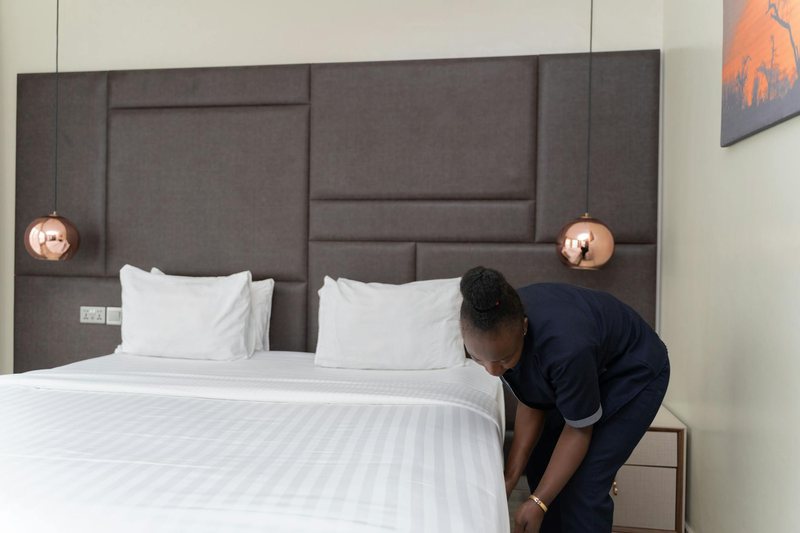
Predictable presence. The site is cleaned every day it is meant to be cleaned. A named primary cleaner is rostered to your contract, supported by a named relief who is already vetted, inducted, and trained on the same colour-coded system and IPC standard. The schedule does not depend on whether one person is available on one day.
Predictable freedom. A single point of accountability. One contract. One named manager. One number to call. Cleaning is no longer a problem the site has to manage — it is a service that runs.
Why cleaning in Ireland is structurally hard to get right
Most cleaning provision in Ireland — including in healthcare-adjacent settings — is delivered by a workforce that is structurally part-time and casual. A significant proportion of operatives across the sector also work as healthcare assistants in nursing homes, residential care, and acute hospitals. Cleaning shifts are typically taken when healthcare shifts are not available, and released when they are. This pattern is consistent with CSO labour data on accommodation, food, and administrative-support employment, and it is the underlying reason that buyers across Ireland encounter inconsistency from agencies they have contracted in good faith.
The pattern is reinforced by two background pressures specific to Ireland. Housing affordability limits the catchment for any role paying at or near the minimum wage. The Contract Cleaning Employment Regulation Order rate of €14.80 per hour for 2026, set under the Labour Court's sectoral employment framework, sits close enough to flexible care-sector pay that operatives drift toward whichever shift pays slightly more on the day. Both pressures pull cleaning staff away from contracted shifts and toward casual healthcare work.
The result, from the buyer's perspective, is the experience most practice managers, facilities leads, and procurement officers in Ireland describe: a clean that is half-completed when the contracted cleaner is available, missed entirely when they are not, and accompanied by recurring conversations with the agency about cover that may or may not arrive.
This is the structural problem Optus Glean is built to solve. Our operatives are fully PAYE-employed with guaranteed weekly hours, paid leave, and pension contributions under Irish auto-enrolment. They are paid above the ERO floor deliberately — because the structural reliability of the service depends on the cleaner choosing to remain in the role rather than rotating through casual healthcare shifts. A named primary cleaner is assigned to your site, supported by a named relief, both Garda-vetted and trained to Optus Glean's documented HIQA-aligned IPC standard.
Why Pharmaceutical Facilities Need Specialist Cleaning
Ireland is one of the world's leading pharmaceutical manufacturing centres, with over 120 pharmaceutical and biopharmaceutical companies operating in the country, producing approximately 50% of all medicines sold in Europe. These facilities operate under the most stringent cleaning and hygiene standards of any industry — because the consequences of contamination are not commercial inconvenience but direct patient harm.
The Health Products Regulatory Authority (HPRA) inspects pharmaceutical manufacturing facilities in Ireland against EU GMP (Good Manufacturing Practice) standards. A GMP deficiency finding related to cleaning can result in production suspension, batch recall, regulatory warning letters, and in severe cases, facility closure. Cleaning in a pharmaceutical facility is not housekeeping — it is a validated, documented, audited manufacturing support process that directly impacts product quality and patient safety.
Optus Glean provides dedicated pharmaceutical cleaning teams trained in GMP, cleanroom protocols, and the specific requirements of Ireland's pharmaceutical sector. Our operatives understand contamination control, aseptic technique, environmental monitoring, and the documentation standards required by HPRA. We work with pharmaceutical manufacturers, contract manufacturing organisations (CMOs), biotech companies, and medical device manufacturers across Ireland.
Cleanroom Cleaning (ISO 14644)
Cleanroom cleaning is the most technically demanding cleaning discipline. Every action inside a cleanroom — every movement, every wipe, every step — must be performed in a way that minimises particle generation and maintains the classified environment. Our cleanroom cleaning protocols are designed for ISO 14644-1 classified environments from ISO Class 5 (EU GMP Grade A) through ISO Class 8 (EU GMP Grade D).
- Floor cleaning using pre-saturated sterile mops (single-use for Grade A/B, validated re-use for Grade C/D)
- Wall cleaning using sterile wipes applied in overlapping unidirectional strokes
- Ceiling and light fitting cleaning including HEPA filter surrounds
- Equipment exterior cleaning using validated cleaning agents
- Pass-through hatch cleaning and sanitisation
- Airlock cleaning with door interlocking awareness
- Environmental monitoring support: settle plate placement, air sampling co-ordination
- Sporicidal rotation programme to prevent microbial adaptation
All cleanroom cleaning is performed using pre-validated methods with approved cleaning agents. Chemicals are rotated on a defined schedule (typically biocide and sporicide in rotation) to prevent microbial adaptation. All cleaning activities are recorded in batch-style documentation for GMP compliance.
Gowning Areas and Controlled Corridors
Gowning areas are the gateway between the uncontrolled and controlled environments. They are one of the most important areas in any pharmaceutical facility, and their cleanliness directly impacts the cleanliness of the cleanrooms they serve. Our gowning area cleaning covers floor cleaning and sanitisation, bench and seating cleaning, gowning hooks and storage cleaning, mirror and vision panel cleaning, air shower maintenance (external surfaces only — HVAC systems maintained by engineering), waste bin emptying and liner replacement, and hand sanitiser dispenser refilling. Gowning areas are cleaned daily, with a deep clean weekly. Cleaning moves from the clean side (closest to the cleanroom) to the dirty side (closest to the corridor) to maintain the contamination gradient.
Non-Classified and Support Area Cleaning
Pharmaceutical facilities include extensive non-classified areas — warehouses, packaging halls, QC laboratories, offices, canteens, and staff facilities — that still require higher-than-standard cleaning to support the overall contamination control strategy. These areas are cleaned to defined standards that prevent them from becoming contamination sources for the classified areas.
Our support area cleaning includes office and laboratory cleaning, warehouse and staging area floor care, packaging hall cleaning with particulate control, washroom and changing room cleaning, canteen and break room HACCP-compliant cleaning, loading dock and goods-in area cleaning, and waste management including pharmaceutical waste segregation. All support area cleaning is documented and scheduled in co-ordination with cleanroom cleaning to maintain the facility's contamination control hierarchy.
Pharmaceutical Cleaning Pricing
Pharmaceutical cleaning pricing depends on the ISO classification of cleanrooms, the size of the facility, validation requirements, and the scope of controlled environments. Below are indicative 2026 pricing ranges for Ireland.
| Service | Price Range | Notes |
|---|---|---|
| Small pharma / packaging facility | €2,000 – €3,500/month | ISO 7-8 cleanrooms + support areas |
| Mid-sized manufacturing facility | €3,500 – €5,500/month | ISO 5-8 cleanrooms + full support |
| Large multi-building pharma campus | €5,500 – €8,000+/month | Multiple cleanroom suites, full service |
| Shutdown deep clean | €5,000 – €25,000+ | Full facility, validated, documented |
| Cleaning validation support | €1,500 – €5,000 | Protocol development + execution |
Note: Prices exclusive of VAT. All pricing includes GMP-compliant documentation, validated cleaning agents, cleanroom-trained operatives, and environmental monitoring support. Pricing is based on individual site survey and validation requirements.
Cleaning Validation and Documentation
In pharmaceutical manufacturing, cleaning validation is a regulatory requirement. Every cleaning method must be proven effective through documented validation, and the validated state must be maintained through ongoing monitoring and change control. Optus Glean supports your cleaning validation programme by developing cleaning SOPs for every area and equipment type, executing validation protocols under QA oversight, providing environmental monitoring data (particle counts, microbial monitoring), maintaining batch-style cleaning records for each cleaning event, participating in deviation investigation and CAPA processes, and managing change control for any modification to cleaning methods. Our documentation system is designed to withstand HPRA inspection and meets the requirements of EudraLex Volume 4, PIC/S guidance, and FDA expectations for facilities exporting to the United States.
Serving Pharmaceutical Facilities Across Ireland
Optus Glean provides pharmaceutical and cleanroom cleaning services across Ireland's pharmaceutical corridor and beyond. We work with multinational pharmaceutical companies, Irish biotech firms, contract manufacturers, medical device companies, and research facilities. Whether you operate a small biotech cleanroom in Galway, a large-scale pharmaceutical plant in Cork, a sterile manufacturing facility in Dublin, or a medical device plant in Limerick, we have the GMP-trained teams and validated systems to support your production hygiene requirements.
Frequently asked questions
How much does transport and logistics cleaning cost in Ireland in 2026?
An airport, station, or depot is priced as a fixed monthly fee tied to scope: 24/7 high-throughput cleaning, regulated-zone cover where applicable (airside, security-cleared areas), washrooms, public concourse, staff areas, and out-of-hours deep cleans. The Contract Cleaning ERO 2026 sets a €14.80/hour labour floor across the sector, but reputable providers quote the contract — multi-year term, annual indexed review, single monthly Direct Debit — not the hour.
What standards apply to transport-sector cleaning in Ireland?
The HSA's Safety, Health and Welfare at Work Act 2005 sets the workplace baseline. The IAA regulates Irish airports, with EASA airport facility standards applying inside regulated zones. The Department of Transport sets broader policy. The cleaning programme must produce a documented audit trail — SDS, signed task logs, training register, security clearance records — that supports the operator's regulatory file.
Who can clean an airside zone in Ireland?
Only operatives with current airside security clearance — vetted and ID-pass-holding — can work airside. Clearance is granted by the airport operator under IAA-regulated procedures, with background checks that take weeks to complete. A reputable cleaning provider holds a stable, PAYE-employed pool of cleared operatives so airside cover does not collapse when one person leaves. Casual or agency staffing breaks under this model the first time a clearance lapses.
How is 24/7 cleaning actually delivered at a transport hub?
A 24/7 transport contract typically runs three shifts of named PAYE-employed cleaners with documented handovers, a named site lead per shift, and a reserve relief crew on call. Public concourse, washrooms, and high-throughput areas are cleaned continuously; deep-clean cycles run during the lowest-throughput window. The handover log and shift records are part of the audit trail, not optional.
What's the difference between PAYE and casual cleaning contracts in transport?
A PAYE-employed cleaner is on payroll with the company that signs the contract, paid above the Contract Cleaning ERO €14.80/hour floor, with guaranteed hours, paid leave, and PRSI/pension. A casual or self-employed operative is none of those things. In a regulated environment with security clearance and 24/7 cover, PAYE staffing is the only model that holds the clearance pool, the shift rota, and the named-cleaner continuity together.
How do I evaluate a cleaning provider for a transport site?
Three checks. One: are the operatives PAYE-employed by the company that signs the contract, with security clearance held in their own name? Two: how does the provider hold the clearance pool — what is the redundancy depth across the 24/7 shift pattern? Three: can the provider produce method statements, SDS, and shift handover logs that satisfy IAA and HSA audit standards on day one?
What should be in a cleaning contract for a transport hub?
24/7 shift coverage with named site lead per shift, regulated-zone clearance commitments, public concourse and washroom programme, deep-clean rotation, the chemical regime with SDS, PAYE-employed staff confirmation, fixed monthly fee, annual indexed review, transparent KPI reporting tied to throughput, and a clean exit clause. No per-hour pricing.
How often should a transport hub be deep-cleaned?
A transport hub runs continuous high-throughput visible cleaning, daily out-of-hours resets in the lowest-throughput window, weekly periodic tasks (high-level dusting, glass, signage), and quarterly or six-monthly deep cleans of floors, soft furnishings, and ducting. In Ireland, larger hubs typically schedule deep-clean rotations across phased zones so service continues without disruption.
How Optus Glean handles staff shortages
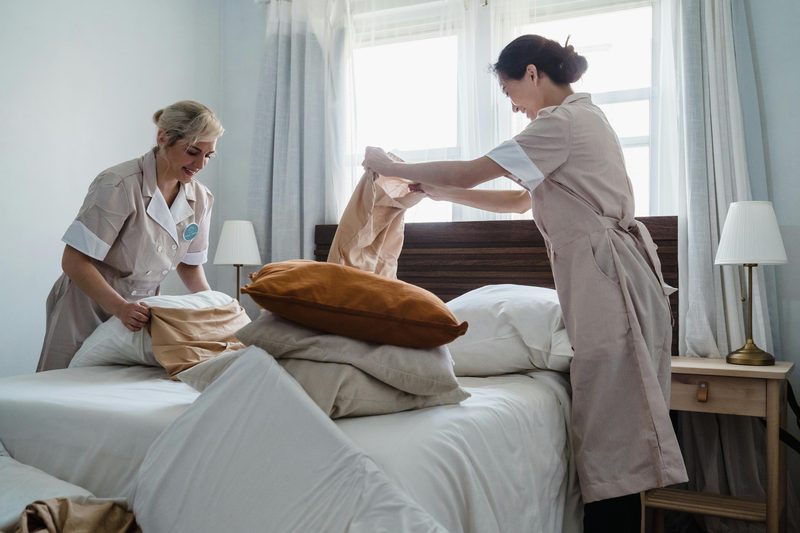
Every Optus Glean contract is staffed on a redundancy model rather than a single-person model. A named primary cleaner is assigned to the site at contract start. A named relief is assigned alongside them. Both are PAYE-employed by Optus Glean, both are Garda-vetted, both are inducted on the site's specific layout, access protocols, and colour-coded equipment system, and both are trained to the same documented HIQA-aligned IPC standard. Substitution is built into the contract from the first day, not arranged on the day cover is needed.
Sick day cover. When the primary cleaner is unable to work, the named relief is deployed. The site site contact is notified by 06:30 on the morning of the absence by SMS or email, with the name of the relief who is attending. The relief follows the same task list, uses the same equipment, and finishes within the same window. The standard of clean is unchanged because the relief was prepared for this scenario before the absence happened.
Annual leave cover. Annual leave is rostered weeks in advance and the relief is scheduled to cover the full leave period. The site is informed at the start of the leave period — not on the morning leave begins. This is the same model used in clinical rota management: known absences are pre-staffed, not improvised.
Long-term cover. If the primary cleaner is absent for more than two weeks (extended illness, parental leave, bereavement leave), cover is drawn from the wider trained bench rather than relying on the single named relief. The site is kept informed of the cover plan, the named individuals involved, and the expected duration. Continuity of standard is maintained because every operative on the bench is trained to the same documented standard.
Permanent reassignment. If the primary cleaner moves to a new permanent role within Optus Glean — promotion, relocation, retirement — the relief is promoted to primary on a planned timetable, a new relief is trained on the site, and both are introduced to the site before the handover takes effect. There is no day on which the site discovers, after the fact, that their cleaner has changed.
Substitution is Optus Glean's operational problem, not the site's risk to absorb. The buyer pays a fixed monthly fee for a defined scope to be delivered, every day it is meant to be delivered. The mechanism by which we deliver it — primary, relief, bench, retraining — is our cost to manage and our risk to carry.
Last reviewed: 2026-05-06