
The Optus Glean promise: predictability
Three pillars. Three commitments. No exceptions.
Predictable cost. One fixed monthly fee, set against a defined scope and an annual indexed review. No variable hours. No surprise invoices. No padded callout charges. Budgeted once, paid by Direct Debit, reviewed once a year.
Predictable presence. The site is cleaned every day it is meant to be cleaned. A named primary cleaner is rostered to your contract, supported by a named relief who is already vetted, inducted, and trained on the same colour-coded system and IPC standard. The schedule does not depend on whether one person is available on one day.
Predictable freedom. A single point of accountability. One contract. One named manager. One number to call. Cleaning is no longer a problem the hotel has to manage — it is a service that runs.
Why cleaning in Galway is structurally hard to get right
Most cleaning provision in Ireland — including in healthcare-adjacent settings — is delivered by a workforce that is structurally part-time and casual. A significant proportion of operatives across the sector also work as healthcare assistants in nursing homes, residential care, and acute hospitals. Cleaning shifts are typically taken when healthcare shifts are not available, and released when they are. This pattern is consistent with CSO labour data on accommodation, food, and administrative-support employment, and it is the underlying reason that buyers across Ireland encounter inconsistency from agencies they have contracted in good faith.
The pattern is reinforced by two background pressures specific to Galway. Housing affordability limits the catchment for any role paying at or near the minimum wage. The Contract Cleaning Employment Regulation Order rate of €14.80 per hour for 2026, set under the Labour Court's sectoral employment framework, sits close enough to flexible care-sector pay that operatives drift toward whichever shift pays slightly more on the day. Both pressures pull cleaning staff away from contracted shifts and toward casual healthcare work.
The result, from the buyer's perspective, is the experience most practice managers, facilities leads, and procurement officers in Galway describe: a clean that is half-completed when the contracted cleaner is available, missed entirely when they are not, and accompanied by recurring conversations with the agency about cover that may or may not arrive.
This is the structural problem Optus Glean is built to solve. Our operatives are fully PAYE-employed with guaranteed weekly hours, paid leave, and pension contributions under Irish auto-enrolment. They are paid above the ERO floor deliberately — because the structural reliability of the service depends on the cleaner choosing to remain in the role rather than rotating through casual healthcare shifts. A named primary cleaner is assigned to your site, supported by a named relief, both Garda-vetted and trained to Optus Glean's documented HIQA-aligned IPC standard.
Professional Hotel Housekeeping in Galway
Galway is one of Ireland's most important tourism destinations. The city's unique character — the Latin Quarter's cobblestone streets, the Spanish Arch, the bustling pubs and restaurants of Quay Street and Shop Street, the Claddagh — draws visitors from around the world. The Galway International Arts Festival in July, the Galway Film Fleadh, the Galway Races in late July and early August, and the Galway International Oyster and Seafood Festival in September create intense demand peaks that challenge every hotel's housekeeping capacity.
Beyond the city, Galway is the gateway to Connemara — one of Ireland's most spectacular landscapes. Hotels and country houses at Ballynahinch Castle, Cashel House, Renvyle House, and along the coast serve discerning guests who expect the highest standards. Salthill, Galway's seaside suburb, has a dense concentration of hotels and guesthouses along the promenade, from the Galway Bay Hotel to the Salthill Hotel and numerous smaller properties.
Optus Glean provides hotel housekeeping that scales with Galway's tourism rhythms. We supply trained, Garda vetted housekeeping teams that maintain your brand standard whether you are at 30% occupancy in January or 100% during Race Week.
What Our Galway Hotel Cleaning Covers
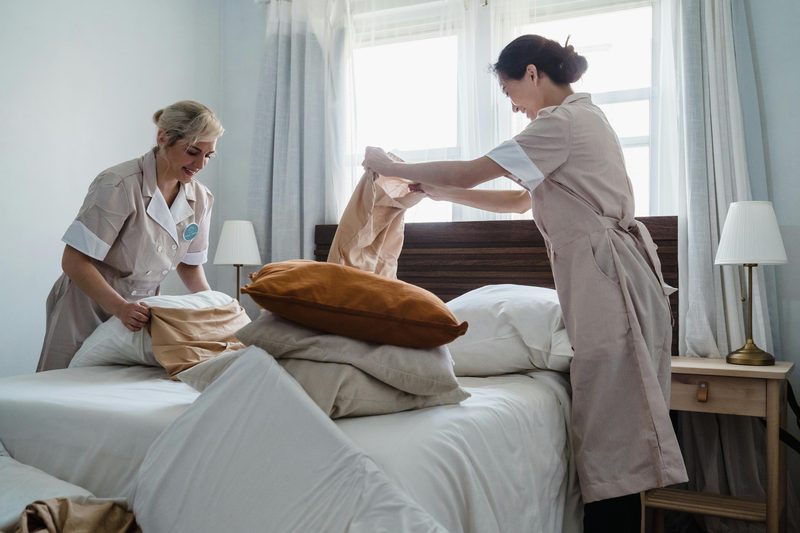
Guest Room Housekeeping
- Full bed making to your brand specification
- Bathroom deep clean — shower, bath, toilet, basin, mirrors, chrome
- Amenity replenishment — toiletries, towels, tea/coffee
- Vacuuming or mopping all floors
- Dusting surfaces, lamps, headboards, furniture
- Maintenance issue reporting
- Minibar restocking where applicable
Public Areas, Restaurants & Conference Facilities
Lobbies, reception, corridors, lifts, stairwells, public washrooms maintained throughout the day. Restaurant pre-service and post-service cleaning. Conference room rapid turnaround between events — essential during festival season when hotels host back-to-back events.
Galway Tourism Areas We Serve
- Galway City Centre — Eyre Square, Latin Quarter, Spanish Arch, Quay Street. High-volume hotels like the Galmont, the Hardiman, the Meyrick, and numerous boutique properties
- Salthill — Seafront hotels and guesthouses along the promenade. Galway Bay Hotel, Salthill Hotel, and dozens of B&Bs
- Connemara — Ballynahinch Castle, Cashel House, Renvyle House, Connemara Coast Hotel, Abbeyglen Castle. Premium country house properties requiring high-standard housekeeping
- Oranmore & East Galway — Hotels serving the business traveller and commuter market
- Loughrea, Athenry & Tuam — County town hotels and guesthouses
- Aran Islands corridor — Hotels and guesthouses serving Aran Islands visitors, Rossaveal area
Seasonal Flexibility for Galway Hotels
Galway's tourism is intensely seasonal. Key demand peaks:
- Galway Races (late July/early August) — The biggest week in Galway's calendar. Hotels at 100% occupancy, with many guests staying 3–7 nights. Maximum housekeeping demand
- Galway International Arts Festival (July) — Two weeks of events drawing tens of thousands of visitors
- Galway Film Fleadh (July) — International film festival with associated hotel demand
- Galway International Oyster & Seafood Festival (September) — Major tourism event
- Summer peak (June–August) — Sustained high occupancy across city and Connemara
Optus Glean provides variable staffing that matches your occupancy. During peak periods, we deploy additional housekeeping operatives. During quieter months, your costs reduce. You maintain quality without carrying overhead.
How Optus Glean handles staff shortages
Every Optus Glean contract is staffed on a redundancy model rather than a single-person model. A named primary cleaner is assigned to the site at contract start. A named relief is assigned alongside them. Both are PAYE-employed by Optus Glean, both are Garda-vetted, both are inducted on the site's specific layout, access protocols, and colour-coded equipment system, and both are trained to the same documented HIQA-aligned IPC standard. Substitution is built into the contract from the first day, not arranged on the day cover is needed.
Sick day cover. When the primary cleaner is unable to work, the named relief is deployed. The hotel site contact is notified by 06:30 on the morning of the absence by SMS or email, with the name of the relief who is attending. The relief follows the same task list, uses the same equipment, and finishes within the same window. The standard of clean is unchanged because the relief was prepared for this scenario before the absence happened.
Annual leave cover. Annual leave is rostered weeks in advance and the relief is scheduled to cover the full leave period. The hotel is informed at the start of the leave period — not on the morning leave begins. This is the same model used in clinical rota management: known absences are pre-staffed, not improvised.
Long-term cover. If the primary cleaner is absent for more than two weeks (extended illness, parental leave, bereavement leave), cover is drawn from the wider trained bench rather than relying on the single named relief. The hotel is kept informed of the cover plan, the named individuals involved, and the expected duration. Continuity of standard is maintained because every operative on the bench is trained to the same documented standard.
Permanent reassignment. If the primary cleaner moves to a new permanent role within Optus Glean — promotion, relocation, retirement — the relief is promoted to primary on a planned timetable, a new relief is trained on the site, and both are introduced to the hotel before the handover takes effect. There is no day on which the hotel discovers, after the fact, that their cleaner has changed.
Substitution is Optus Glean's operational problem, not the hotel's risk to absorb. The buyer pays a fixed monthly fee for a defined scope to be delivered, every day it is meant to be delivered. The mechanism by which we deliver it — primary, relief, bench, retraining — is our cost to manage and our risk to carry.
Frequently asked questions
How much does hotel and hospitality cleaning cost in Ireland in 2026?
A hotel, restaurant, or function venue is priced as a fixed monthly fee tied to scope: public-area programme, back-of-house compliance cleaning, washrooms, function spaces, and out-of-hours deep cleans. The Contract Cleaning ERO 2026 sets a €14.80/hour labour floor across the sector, but reputable providers quote the contract — multi-year term, annual indexed review, single monthly Direct Debit — not the hour.
What standards apply to hospitality cleaning in Ireland?
The FSAI Hygiene of Foodstuffs Regulations and HACCP principles set the back-of-house standard; HSE Environmental Health Officers inspect against them. Failte Ireland's classification standards drive the guest-facing benchmark in hotels and serviced apartments. The cleaning programme must produce a documented audit trail — SDS, signed task logs, contact-time records — that supports the GM's FSAI compliance file.
What's the FSAI requirement for back-of-house cleaning?
FSAI inspections check that food-contact and food-adjacent surfaces are cleaned and disinfected to documented frequencies, that chemical use is controlled and justified per the SDS, that colour-coded equipment prevents cross-contamination, and that records evidence the programme. The cleaning provider's job is to deliver and document — the GM and head chef remain the duty-holders, but a credible provider makes audit-ready evidence routine.
What's the difference between guest-facing and back-of-house cleaning standards?
Guest-facing cleaning is judged on visible standard — finish, presentation, scent, consistency across rooms — driven by Failte Ireland classification and TripAdvisor reality. Back-of-house cleaning is judged on FSAI and HACCP compliance — food-safe surfaces, validated chemicals, documented frequencies. A reputable provider runs both under one contract with one named site lead, not as separate jobs subcontracted to different crews.
What's the difference between PAYE and casual cleaning contracts in hospitality?
A PAYE-employed cleaner is on payroll with the company that signs the contract, paid above the Contract Cleaning ERO €14.80/hour floor, Garda-vetted where required, with paid leave and PRSI/pension. A casual or self-employed operative is none of those things and rotates between venues. PAYE staffing is the only model that supports a named primary cleaner who actually knows your kitchen extract schedule and your function-room setup pattern.
How do I evaluate a cleaning provider for a hotel?
Three checks. One: are the cleaners PAYE-employed by the company that signs the contract, or subcontracted? Two: who is the named site lead and how is back-of-house separated from guest-facing crew? Three: can the provider produce method statements and SDS that satisfy an FSAI inspection on day one of the contract — not "we'll get there in a few months".
What should be in a cleaning contract for a hotel or restaurant?
Scope per zone (front of house, guest rooms, function spaces, kitchens, waste rooms, washrooms), back-of-house frequencies tied to FSAI and HACCP, named site lead and crew, the chemical regime with SDS and contact times, colour-coded equipment commitment, fixed monthly fee, annual indexed review, audit-ready reporting, and a clean exit clause. No per-hour pricing.
How often should function spaces and event venues be cleaned?
Function spaces are cleaned to event turnaround — pre-event reset, mid-event support where contracted, post-event deep clean — over and above the daily public-area programme. The cleaning provider should hold a known-volume retainer with named relief crews available for weekend and out-of-hours peaks. In Galway, larger function venues typically pre-book extra crews for the November-to-January season.
Related Services in Galway
- Office Cleaning Galway
- Healthcare Cleaning Galway
- End of Tenancy Cleaning Galway
- Laundry & Linen Services
- All Cleaning Services in Galway
Last reviewed: 2026-05-06